

Your cart is currently empty!
How to Choose Clarity Over Hope
Hope is one of the most beautiful human emotions. It helps us persevere through difficult times, chase ambitious dreams, and believe that tomorrow can be better than today. But when it comes to relationships, hope can become dangerous when it replaces clarity.
Many people stay in unhealthy relationships, wait for emotionally unavailable partners, or ignore repeated red flags because they hope things will eventually change. They convince themselves that with enough patience, love, or understanding, the relationship will become what they’ve always imagined.
Unfortunately, hope without evidence often leads to prolonged heartbreak.
Choosing clarity over hope doesn’t mean giving up on love. It means making decisions based on reality instead of potential. It means believing someone’s consistent actions more than the future you’ve imagined for them.
In this guide, we’ll explore why choosing clarity over hope is one of the healthiest decisions you can make, how hope can sometimes keep you stuck, and practical ways to build relationships rooted in reality rather than wishful thinking.
What Does “Choosing Clarity Over Hope” Mean?
Choosing clarity means accepting people as they are today instead of who they might become tomorrow.
It means asking questions like:
- How does this person consistently treat me?
- Do their actions match their words?
- Am I feeling secure or constantly confused?
- Am I in love with reality or with potential?
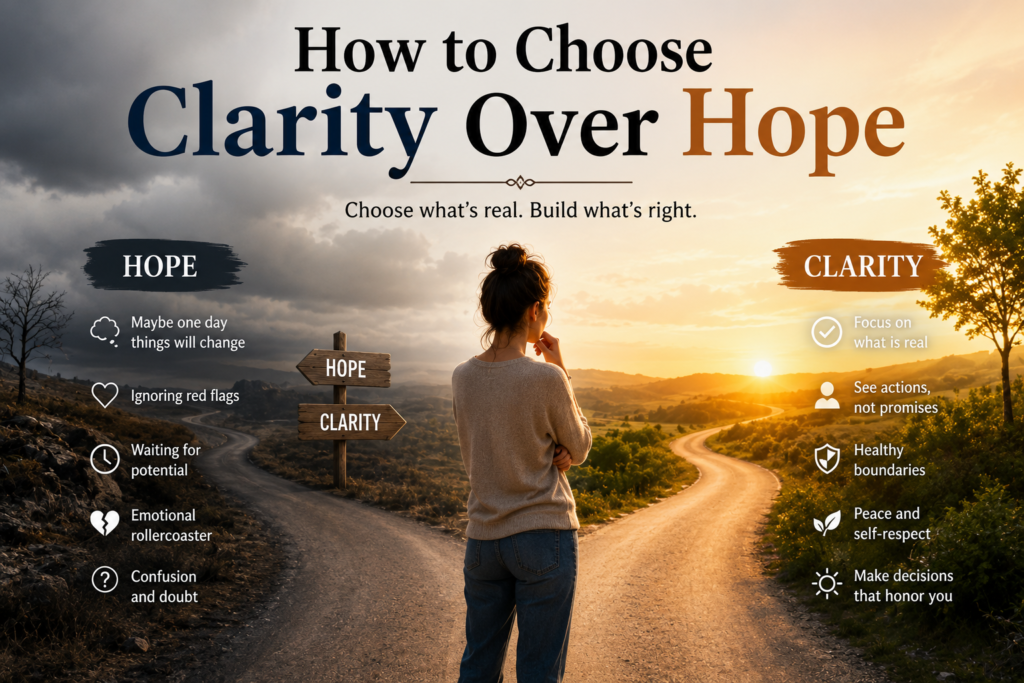
Hope says:
“Maybe they’ll change.”
Clarity says:
“This is how they’re choosing to show up today.”
The healthiest relationships don’t require you to guess where you stand.
Why We Choose Hope Instead of Clarity
Many people don’t ignore red flags because they’re naive—they do it because they’re emotionally invested.
Several psychological factors make hope difficult to let go of.
Fear of Starting Over
Leaving someone often means facing loneliness.
Many people stay because beginning again feels harder than staying unhappy.
Emotional Investment
The more time you’ve invested, the harder it becomes to walk away.
You think:
“I’ve already spent two years on this relationship.”
This is known as the sunk cost fallacy—continuing something simply because you’ve already invested time or effort.
Believing in Potential
Perhaps your partner says all the right things.
Maybe they promise:
- “I’ll change.”
- “Give me more time.”
- “Things will get better.”
Words create hope.
Actions create clarity.
Fear of Missing Out
Some people worry they’ll never meet someone better.
This scarcity mindset makes them tolerate behaviors they’d never accept from a friend or family member.
Signs You’re Choosing Hope Instead of Clarity
You might be choosing hope over clarity if:
- You constantly make excuses for someone’s behavior.
- You’re waiting for them to become emotionally available.
- Their words and actions don’t match.
- You spend more time imagining the future than enjoying the present.
- Friends repeatedly express concern about your relationship.
- You feel confused more often than secure.
- You’re holding onto occasional good moments while ignoring consistent unhealthy patterns.
Why Clarity Brings Emotional Freedom
Clarity removes uncertainty.
When you stop chasing mixed signals, you reclaim emotional energy.
Instead of wondering:
“Why didn’t they text back?”
You begin asking:
“Do I want someone who communicates this way?”
That simple shift changes everything.
Clarity turns you from someone waiting to be chosen into someone choosing what’s healthy for you.
The Cost of Choosing Hope Without Evidence
Holding onto unrealistic hope can affect every area of your life.
Mental Health
Constant uncertainty increases stress and anxiety.
You replay conversations, analyze texts, and question yourself.
Self-Esteem
Repeated disappointment slowly convinces you that you’re somehow “not enough.”
The truth?
Healthy love doesn’t require constant self-doubt.
Lost Time
Months or even years can pass while waiting for someone to become the partner they’ve promised to be.
Time is one of your most valuable resources.
Spend it wisely.
Missed Opportunities
While emotionally attached to someone unavailable, you may overlook people who are genuinely ready for a healthy relationship.
Clarity Looks Different Than You Think
Many people believe clarity means certainty.
It doesn’t.
Clarity simply means accepting reality.
Examples include:
- They consistently cancel plans.
- They avoid defining the relationship.
- They communicate only when convenient.
- They repeatedly cross your boundaries.
These behaviors already provide clarity.
The confusion usually comes from hoping they’ll change.
Questions That Create Clarity
Ask yourself:
How do I usually feel after spending time with them?
More peaceful?
Or more anxious?
Am I accepting reality or imagining potential?
Potential is not a relationship.
Current behavior is.
Would I recommend this relationship to someone I love?
Sometimes advice is easier when imagining someone else.
If nothing changed for the next five years, would I stay?
This question often provides surprising clarity.
How to Choose Clarity Over Hope
1. Believe Consistent Actions
Anyone can make promises.
Consistency builds trust.
Look for repeated behaviors rather than occasional grand gestures.
2. Stop Romanticizing Potential
People deserve to be accepted as they are—not constantly expected to become someone else.
Likewise, you deserve someone who already values and respects you.
3. Accept That Love Isn’t Enough
Love without:
- Respect
- Communication
- Trust
- Emotional safety
- Shared effort
rarely creates lasting relationships.
4. Set Healthy Boundaries
Boundaries reveal clarity quickly.
Healthy people respect boundaries.
Unhealthy people often resist them.
5. Listen to Your Body
Your body often recognizes emotional stress before your mind does.
Notice if you’re experiencing:
- Constant anxiety
- Poor sleep
- Stomach knots
- Emotional exhaustion
These signals deserve attention.
6. Stop Waiting for Perfect Timing
Many relationships stay stuck because people believe:
“When work settles down…”
“After they heal…”
“Next year will be different…”
Sometimes tomorrow becomes another year.
7. Let Actions Answer Your Questions
Instead of repeatedly asking where you stand, observe what someone consistently does.
Actions rarely create confusion.
Inconsistency does.
Choosing Yourself Isn’t Giving Up
Walking away doesn’t mean you’ve failed.
Sometimes the bravest act is accepting that someone cannot give you what you need.
Choosing clarity isn’t choosing loneliness.
It’s choosing emotional peace.
How Clarity Improves Future Relationships
When you prioritize clarity:
- You recognize red flags sooner.
- You stop chasing unavailable people.
- You communicate more openly.
- You develop healthier boundaries.
- You build stronger self-respect.
- You attract emotionally mature partners.
Healthy relationships become easier because you’re no longer confusing uncertainty with excitement.
Daily Habits That Help You Choose Clarity
Small habits reinforce healthier choices:
- Journal about actions instead of assumptions.
- Talk with trusted friends who offer honest feedback.
- Limit overanalyzing text messages.
- Focus on your hobbies and personal growth.
- Practice saying no to inconsistent behavior.
- Remind yourself that confusion is often information—not a challenge to solve.
Over time, these habits make it easier to trust reality instead of wishful thinking.
Frequently Asked Questions
What does choosing clarity over hope mean in a relationship?
It means making decisions based on someone’s consistent actions rather than hoping they will eventually change. Clarity focuses on reality, while hope focuses on possibilities.
Is hope always bad in relationships?
No. Hope is healthy when both partners consistently invest in the relationship. It becomes harmful when it keeps you ignoring red flags or waiting indefinitely for change.
How do I know if I’m holding onto false hope?
If you’re constantly making excuses for someone’s behavior, feeling confused more often than secure, or staying because of who they could become rather than who they are today, you may be holding onto false hope.
Why is clarity important in dating?
Clarity reduces confusion, strengthens boundaries, protects emotional well-being, and helps you invest in relationships that are built on honesty and mutual effort.
Can choosing clarity improve self-esteem?
Yes. When you stop accepting inconsistent treatment and begin making decisions based on self-respect, your confidence and emotional resilience often improve over time.
Final Thoughts
Hope has its place in life—but healthy relationships require more than hope. They require honesty, consistency, mutual respect, and emotional safety.
Choosing clarity over hope doesn’t make you cynical; it makes you emotionally wise. It allows you to stop chasing potential and start appreciating what is real. When someone’s actions repeatedly leave you confused, disappointed, or anxious, believe the pattern rather than the promise.
The right relationship won’t ask you to ignore reality. It will bring clarity, consistency, and peace. And when you choose clarity, you also choose yourself—a decision that lays the foundation for healthier, happier relationships in the future.
Leave a Reply