

Your cart is currently empty!
What It Means When Someone Replies Late But Stays Engaged
There’s a specific texting pattern that confuses a lot of people in early dating: someone takes hours, sometimes most of a day, to reply — but when they do, the message is warm, detailed, and clearly engaged. No short, distracted answers. No sense of obligation. Just a genuinely thoughtful response that happened to arrive later than expected.
This pattern deserves its own analysis, separate from general conversations about slow texting, because the combination of delay and engagement tells a meaningfully different story than delay alone.
Why This Pattern Is More Informative Than Speed Alone
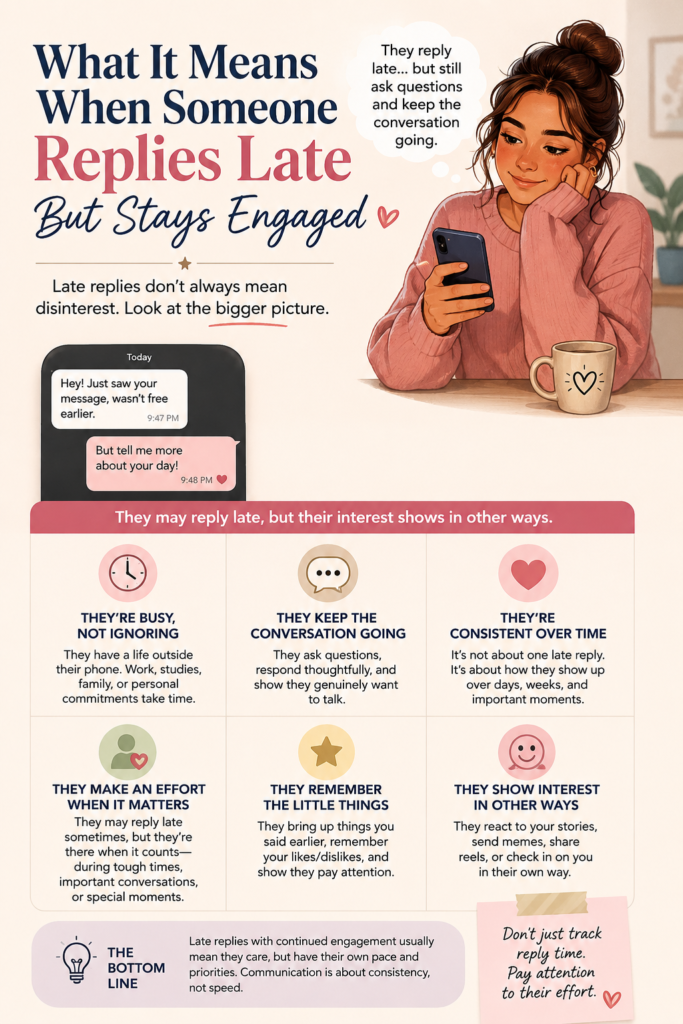
As covered elsewhere, response speed by itself is a weak signal — heavily influenced by personality, schedule, and phone habits, with little reliable connection to actual interest level. But when delay is paired with genuine engagement in the content of the reply, you get a more complete picture. The delay tells you about their availability or communication habits; the quality of the response tells you about their actual investment in the conversation.
Someone who takes hours to reply but writes a thoughtful, detailed message that responds directly to what you said, asks follow-up questions, and carries genuine warmth is showing you something different than someone who replies instantly but with minimal, low-effort responses. Engagement quality is a stronger indicator of interest than speed, and this pattern specifically demonstrates engagement despite delay, not instead of it.
Common, Legitimate Reasons for This Pattern
A lot of people genuinely operate this way by default, unrelated to how much they like the person they’re texting. Some people have demanding jobs, unpredictable schedules, or simply don’t check their phones frequently throughout the day, but make a point of engaging properly once they do sit down to respond, rather than dashing off a quick reply between tasks.
Others are naturally more thoughtful communicators who prefer to give a real response rather than a rushed one — meaning the delay reflects their communication style (waiting until they can respond properly) rather than any lack of enthusiasm about the conversation itself.
What This Pattern Usually Doesn’t Mean
It’s worth directly addressing a common fear: this pattern doesn’t typically indicate that someone is stringing you along, keeping you as a backup option, or deliberately managing their interest level to seem less available. If someone genuinely wanted minimal engagement, the far more common pattern would be short, low-effort replies — not long, thoughtful ones that happen to arrive later than expected. The effort visible in the actual content of a delayed-but-engaged message is a meaningful counter-signal to concerns about waning interest.
How to Distinguish This From Actual Fading Interest
The key distinguishing factor is consistency of engagement quality over time, regardless of delay. If someone consistently replies late but with real substance and warmth — asking questions, referencing earlier parts of the conversation, showing genuine curiosity — that’s a stable, reassuring pattern. What would be more concerning is a shift where the delay stays the same or increases, but the quality of engagement noticeably drops — shorter replies, less curiosity, more generic responses. That combination (delay plus declining quality) is a more legitimate signal of cooling interest than delay alone ever was.
The Anxiety This Pattern Tends to Trigger, and Why It’s Often Misplaced
Because delayed replies activate uncertainty, it’s common to feel anxious during the waiting period even when the eventual reply turns out to be perfectly warm and engaged. This is worth naming explicitly: the anxiety in the waiting period often isn’t actually predictive of the outcome. If you look back at your own dating history, delayed-but-engaged replies have probably, more often than not, turned out to reflect genuine interest rather than disinterest — meaning the anxiety experienced while waiting was, in hindsight, disproportionate to what the eventual message actually communicated.
Recognizing this pattern in your own experience can help recalibrate how much weight to give the anxious waiting period the next time it happens, rather than treating the discomfort as reliable evidence of a problem.
Should You Ask About Their Texting Habits Directly?
If the uncertainty around this pattern is genuinely bothering you, it’s reasonable to ask directly, in a light, non-accusatory way — something like, “I’ve noticed you tend to reply a bit later, totally fine, just curious about your texting style so I know what to expect.” This kind of direct, curious question tends to produce more clarity than continued silent interpretation, and it also gives the other person an easy opportunity to explain their pattern, which can reduce anxiety on both sides.
This approach is generally more productive than either silently worrying or unilaterally deciding what the pattern means without ever checking your assumption against their actual explanation.
Should You Match Their Pace?
There’s no strict rule requiring you to match someone else’s texting pace, but it can genuinely reduce mutual pressure if both people settle into a rhythm that reflects their natural habits rather than one person consistently over-functioning to compensate for the other’s slower pace. If you’re a naturally faster texter dating someone with this delayed-but-engaged pattern, it’s worth considering whether you can comfortably adjust your expectations to their rhythm, or whether the pacing difference itself creates ongoing frustration that’s worth discussing directly.
When This Pattern Might Signal a Genuine Mismatch
If the delayed pace, even when paired with quality engagement, consistently creates more anxiety and dissatisfaction for you than it resolves, that’s valid information worth taking seriously — even if the other person’s interest is genuine. Compatibility isn’t only about whether someone is interested; it’s also about whether your respective communication styles work well together in practice. Two people can both be genuinely interested and still be a poor match in terms of communication rhythm, and that mismatch is worth acknowledging honestly rather than assuming interest alone should be enough to make any pacing difference work.
The Takeaway
Late replies combined with genuine, substantive engagement are usually a reassuring pattern, not a concerning one — the delay typically reflects communication habits or circumstances, while the quality of the response reflects actual interest. What’s worth monitoring isn’t the delay itself, but whether the quality of engagement holds steady over time. If it does, this pattern is far more often a sign of a busy, thoughtful communicator than a sign of fading interest — even though the waiting period itself can feel uncomfortable regardless of how the message eventually turns out.
Leave a Reply