

Your cart is currently empty!
Why Dating Silence Feels Overwhelming
One of the most difficult parts of modern dating isn’t rejection—it’s silence.
You have a great date. The conversation flows naturally. They smile, laugh, and even suggest meeting again. Then suddenly… nothing.
Hours turn into days.
You begin checking your phone more often than usual. Every notification makes your heart race. You replay conversations in your head, wondering whether you said something wrong. Even though nothing has technically happened, the silence feels surprisingly painful.
If you’ve experienced this, you’re far from alone.
Dating silence often feels overwhelming because it creates uncertainty, interrupts emotional momentum, and leaves your brain searching for answers that simply aren’t available. The discomfort isn’t a sign that you’re “too emotional.” It’s a normal psychological response to ambiguity, emotional investment, and the human need for clarity.
Understanding why silence affects us so deeply can make it easier to respond thoughtfully rather than react impulsively.
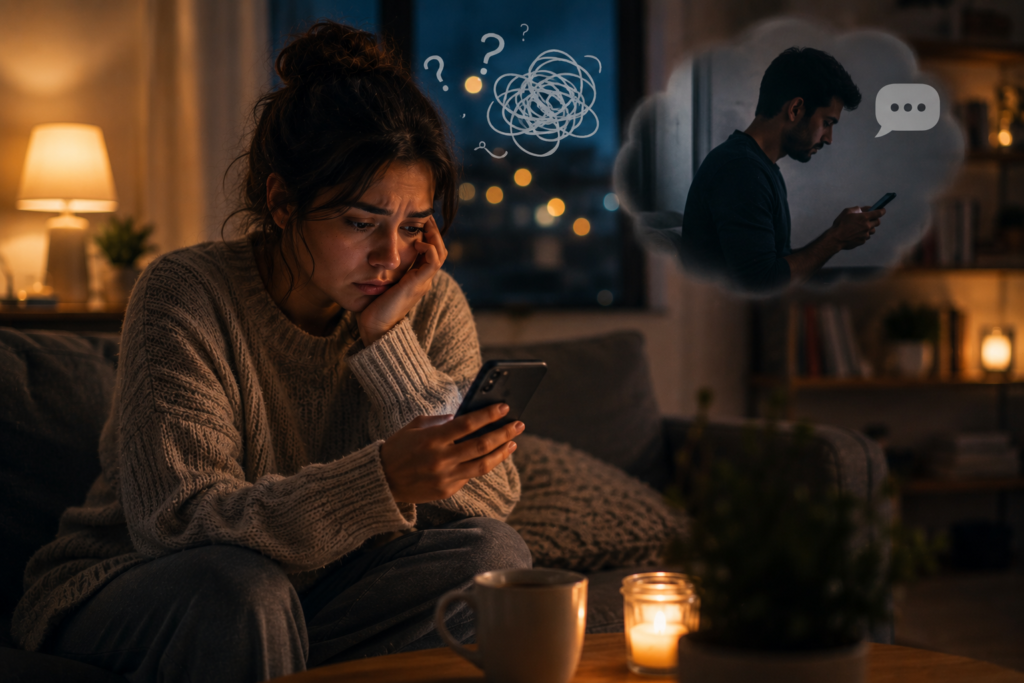
Silence Feels Different Than Rejection
Many people assume rejection would hurt more than silence.
Surprisingly, uncertainty is often harder to process.
A clear rejection provides closure. Your brain knows where it stands.
Silence offers no explanation.
Instead, your mind creates dozens of possibilities:
- Maybe they’re busy.
- Maybe they’re losing interest.
- Maybe they’re waiting for me.
- Maybe I texted too much.
- Maybe something happened.
- Maybe they simply forgot.
Without answers, your brain keeps searching.
That constant search is emotionally exhausting.
Your Brain Naturally Wants Closure
Human beings dislike uncertainty.
Psychologists describe this as the need for cognitive closure—the desire to reduce ambiguity and arrive at a clear understanding of a situation.
When someone suddenly becomes quiet, your brain remains in an “open loop.”
Instead of accepting uncertainty, it tries to solve the mystery.
You may notice yourself:
- Re-reading messages.
- Checking social media.
- Looking for hidden meanings.
- Replaying your last conversation.
- Wondering if they’re online.
- Imagining future conversations.
These behaviors aren’t irrational—they’re your brain attempting to reduce uncertainty.
Emotional Investment Changes Everything
Dating silence rarely feels overwhelming after the very first interaction.
It becomes difficult once emotional investment begins.
That investment often develops through small moments:
- Great conversations.
- Shared laughter.
- Inside jokes.
- Future plans.
- Personal stories.
- Daily texting.
Gradually, someone occupies more emotional space in your life.
Once that happens, silence no longer feels neutral.
It feels personal.
The Power of Anticipation
One reason silence feels so intense is anticipation.
After spending time with someone, your brain begins expecting another interaction.
That expectation creates emotional momentum.
When communication suddenly stops, the momentum is interrupted.
Psychologically, this resembles an unfinished story.
Your brain naturally wants the next chapter.
Without it, attention keeps returning to the unanswered question.
Why Silence Creates Anxiety
Anxiety often grows when we lack information.
Silence removes certainty about:
- Their feelings.
- Their intentions.
- The future of the relationship.
- Whether another date will happen.
- Whether you should reach out.
Because your brain dislikes unknown outcomes, it often assumes worst-case scenarios.
This process is called negativity bias.
Instead of imagining positive explanations, people naturally imagine threats first.
Attachment Styles Influence How Silence Feels
Not everyone experiences dating silence the same way.
Attachment patterns play a major role.
Secure Attachment
Secure individuals may wonder what’s happening, but they usually tolerate uncertainty without assuming immediate rejection.
Anxious Attachment
People with anxious attachment often experience silence as emotionally intense.
They may worry:
- “Did I do something wrong?”
- “They’re losing interest.”
- “I need reassurance.”
Avoidant Attachment
Avoidant individuals sometimes withdraw emotionally when silence occurs.
Instead of seeking answers, they may convince themselves they no longer care.
Neither response is inherently “right” or “wrong.”
They’re simply different ways people attempt to protect themselves emotionally.
Why Modern Dating Makes Silence Worse
Technology has changed dating expectations.
Years ago, waiting several days between conversations was common.
Today we know:
- When someone was recently online.
- When they viewed a story.
- Whether they’re active.
- Whether they’re posting photos.
This constant visibility creates comparisons.
You may think:
“They haven’t replied to me, but they’re posting online.”
That observation often intensifies emotional discomfort—even though it rarely tells the full story.
Silence Doesn’t Always Mean Rejection
Although silence sometimes reflects fading interest, it isn’t always a rejection.
People become quiet for many reasons:
- Busy schedules.
- Family responsibilities.
- Emotional overwhelm.
- Stress at work.
- Personal challenges.
- Different texting habits.
Jumping immediately to the worst conclusion usually creates unnecessary anxiety.
Healthy dating involves allowing room for multiple possibilities before making assumptions.
Why We Personalize Silence
Humans naturally interpret uncertain situations through a personal lens.
Instead of thinking:
“They may have their own reasons.”
We often think:
“I wasn’t interesting enough.”
“I scared them away.”
“They found someone better.”
This tendency is called personalization.
While understandable, it often creates emotional suffering without evidence.
Emotional Exposure Makes Silence Hurt More
Silence feels especially painful after you’ve become emotionally vulnerable.
Perhaps you’ve:
- Shared personal stories.
- Expressed genuine interest.
- Talked about future plans.
- Opened up emotionally.
Once you’ve revealed meaningful parts of yourself, silence can feel like your vulnerability is hanging unanswered.
That’s why it often feels much bigger than a delayed text message.
The Difference Between Healthy Space and Harmful Silence
Not every pause in communication is unhealthy.
Healthy space often includes:
- Clear expectations.
- Consistent effort.
- Honest communication.
- Respect for personal time.
Harmful silence often involves:
- Mixed signals.
- Emotional manipulation.
- Repeated disappearing.
- Long periods without explanation.
- Only returning when convenient.
The pattern matters more than a single delayed reply.
How to Respond Instead of React
When silence begins feeling overwhelming, resist the urge to act from panic.
Instead:
Pause Before Sending Multiple Messages
Give yourself time before assuming something is wrong.
Continue Your Daily Routine
Spend time with friends.
Exercise.
Work.
Pursue hobbies.
Keeping your own life active reduces emotional dependence.
Challenge Your Assumptions
Ask yourself:
“What evidence actually supports my conclusion?”
Many fears are based on possibilities—not facts.
Communicate Clearly
If enough time has passed, a simple, respectful follow-up message is healthier than endless guessing.
For example:
“Hey, I enjoyed spending time with you. Just checking in to see how you’re doing.”
Clarity often reduces anxiety.
When Silence Becomes a Pattern
Occasional delays happen in every relationship.
Repeated unexplained disappearances are different.
If someone consistently:
- Leaves conversations unfinished.
- Ignores messages for days without explanation.
- Returns only when convenient.
- Makes promises they don’t keep.
The issue may no longer be your anxiety.
It may be inconsistency.
Healthy relationships are built on reliability, not confusion.
Building Emotional Resilience
One of the best ways to reduce the impact of dating silence is strengthening your emotional foundation.
Remember:
Your worth doesn’t increase because someone texts back quickly.
Your value doesn’t disappear because someone becomes quiet.
A healthy relationship should add to your life—not become the sole source of your emotional stability.
Maintaining friendships, personal goals, hobbies, and self-care creates resilience that helps you navigate uncertainty without losing yourself.
The Takeaway
Dating silence feels overwhelming because it activates one of our deepest psychological needs—the desire for certainty, connection, and reassurance. When communication suddenly stops, the brain naturally searches for explanations, often filling the gaps with fear rather than facts.
But silence isn’t always rejection, and it isn’t always about you.
Sometimes it’s simply a pause. Sometimes it’s incompatibility. Sometimes it’s someone else’s circumstances.
The healthiest response isn’t to suppress your feelings or obsess over every unanswered message. It’s to recognize the discomfort for what it is: a normal reaction to uncertainty while choosing behaviors that protect your peace rather than fuel your anxiety.
Ultimately, the right relationship won’t leave you constantly guessing. While no connection is perfect, healthy dating gradually replaces confusion with consistency, uncertainty with trust, and silence with communication that makes you feel respected, valued, and emotionally safe.
Leave a Reply