

Your cart is currently empty!
Why Texting Habits Change Suddenly
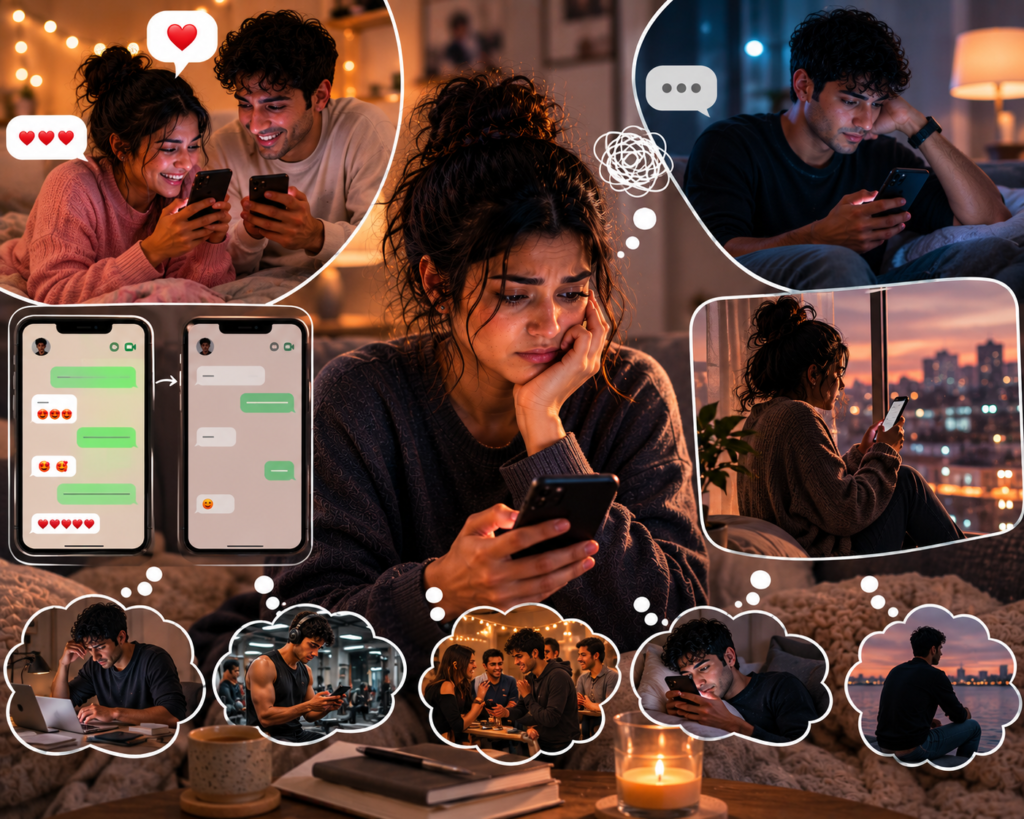
One day, you’re texting constantly.
Good morning messages.
Random updates.
Memes.
Long conversations at night.
Then suddenly, something changes.
Replies become shorter.
Messages arrive less often.
The good-night texts disappear.
You start noticing longer gaps between conversations.
And naturally, you begin wondering:
“Why did their texting habits change so suddenly?”
When you’re emotionally invested in someone, a change in communication can feel much bigger than it actually is. In a situationship, it can be even more confusing because you may already be unsure about where the relationship stands.
You might wonder whether they are losing interest, becoming emotionally distant, talking to someone else, or simply becoming more comfortable with the relationship.
The truth is that texting habits can change for many reasons.
Sometimes the reason has nothing to do with you.
Sometimes it reflects a change in someone’s life.
And sometimes a sudden change in communication is worth paying attention to.
Understanding why texting habits change suddenly can help you avoid jumping to conclusions while still recognizing genuine changes in a relationship.
Why Do Texting Habits Change?
Texting isn’t a fixed behavior.
People’s communication changes depending on their:
- Schedule
- Mood
- Stress levels
- Responsibilities
- Relationship expectations
- Communication preferences
- Emotional availability
Someone may text constantly during one period and become quieter during another without their feelings necessarily changing.
However, when a change is sudden and persistent, it’s reasonable to wonder what’s happening.
The key is to look at the pattern, not just one unusual day.
1. Their Daily Routine May Have Changed
One of the simplest explanations is that something changed in their life.
They may have:
- Started a new job.
- Become busier at work.
- Started studying.
- Taken on family responsibilities.
- Changed their schedule.
- Started traveling.
- Become involved in a new project.
When someone’s routine changes, their phone habits may change too.
A person who previously had hours to chat may suddenly have much less time.
This doesn’t automatically mean their feelings have changed.
2. The Initial Excitement May Have Settled
Early dating can involve a lot of texting.
Everything feels new.
You want to know everything about each other.
You may stay up late talking.
You constantly have something new to discuss.
As familiarity develops, texting may naturally become less intense.
This isn’t necessarily a loss of interest.
Sometimes it simply means the communication is moving from new and exciting to more comfortable and familiar.
The important question is whether affection and effort remain present.
3. They May Feel More Comfortable With You
Interestingly, reduced texting can sometimes happen because someone feels more secure.
At the beginning, they may feel the need to stay constantly connected.
Later, they may feel comfortable knowing:
“We don’t have to talk every minute for this connection to be okay.”
This can be healthy if the overall relationship remains consistent.
However, comfort shouldn’t become an excuse for completely disappearing or neglecting the connection.
4. Their Interest May Have Changed
Sometimes the simplest explanation is also possible.
A person may become less interested.
If texting decreases alongside:
- Less effort.
- Fewer plans.
- Less affection.
- Less curiosity.
- More emotional distance.
then the change may be meaningful.
One change alone doesn’t prove anything.
But several changes happening together can indicate that the relationship dynamic has shifted.
5. They May Be Unsure About the Relationship
Situationships can create complicated emotions.
Someone may enjoy the connection but become uncertain about where it’s going.
They might think:
“We’re getting too close.”
“I don’t know if I want a relationship.”
“I need some space to figure out what I want.”
Instead of communicating this directly, some people naturally become less available.
That doesn’t make the behavior ideal, but it can explain why communication suddenly changes.
6. They May Be Emotionally Overwhelmed
People sometimes withdraw when they’re dealing with emotional stress.
They may be experiencing:
- Work pressure.
- Family problems.
- Personal difficulties.
- Burnout.
- Emotional exhaustion.
When someone is overwhelmed, even texting a person they care about can feel like another responsibility.
If their communication becomes quieter across the board—not just with you—it may have more to do with what they’re dealing with personally.
7. They May Prefer a Different Communication Style
Not everyone has the same relationship with their phone.
Some people love texting.
Others prefer:
- Phone calls.
- Face-to-face conversations.
- Voice notes.
- Occasional check-ins.
Someone may gradually realize that they don’t enjoy constant texting.
That doesn’t automatically mean they aren’t interested.
The important question is whether they still make an effort to connect in ways that work for both of you.
8. The Relationship May Be Becoming More Physical Than Emotional
Sometimes texting decreases because the connection has become focused mainly on meeting physically.
For example, someone may stop having long conversations and mainly text:
“Are you free tonight?”
or:
“Want to come over?”
If emotional communication is disappearing while physical communication remains, it’s worth asking what kind of relationship you’re actually building.
9. They May Be Taking the Connection for Granted
At the beginning, someone may put in a lot of effort because they are trying to establish a connection.
Once they feel secure that you’re interested, their effort may decrease.
This can look like:
- Fewer check-ins.
- Less initiation.
- Shorter replies.
- Less planning.
- Less curiosity.
If you consistently feel like you’re doing all the emotional work, the problem may be more than texting frequency.
10. They May Be Testing Distance
Some people intentionally pull back to see whether the other person notices.
They may want to know:
“Will they text me first?”
“Will they chase me?”
“Do they care?”
This can create an unhealthy dynamic where communication becomes a test.
Healthy relationships generally don’t require people to manufacture distance to measure interest.
11. They Could Be Talking to Someone Else
This possibility can enter your mind quickly when texting habits change.
But don’t automatically assume it.
A change in texting alone isn’t evidence that someone is seeing someone else.
If exclusivity hasn’t been discussed, it’s also important to understand what both people believe the relationship allows.
If exclusivity matters to you, that’s a conversation worth having directly.
12. They May Have Become Less Interested in Digital Communication
Sometimes someone simply gets tired of texting.
They may still enjoy spending time with you but become less interested in having long conversations through their phone.
Look at what happens offline.
Do they still:
- Make plans?
- Show enthusiasm when you’re together?
- Communicate openly?
- Make time for you?
- Show affection?
If yes, the change may simply be a communication preference.
13. They May Be Mirroring Your Communication
Sometimes texting patterns change because the other person believes your behavior has changed.
If you’ve recently:
- Replied less often.
- Become more distant.
- Stopped initiating.
- Started taking longer to respond.
they may interpret that as a signal that you want more space.
People often adjust their communication based on what they perceive from the other person.
14. The Relationship May Have Reached a Turning Point
A sudden change in texting sometimes happens after an important moment.
For example:
- You became physically intimate.
- Someone expressed strong feelings.
- You discussed commitment.
- You had an argument.
- One person asked where the relationship was going.
After a significant conversation, people may behave differently while processing what happened.
If the texting changed immediately after an important event, consider whether that event may have affected the relationship dynamic.
15. They May Be Pulling Away Without Saying It
Not everyone communicates directly when their feelings change.
Some people gradually reduce contact instead.
You may notice:
More texting → less texting → fewer plans → less emotional effort
If this pattern continues, it may be a sign that the person is emotionally distancing themselves.
You don’t need to panic over one quiet week.
But repeated withdrawal shouldn’t be ignored either.
How to Tell If a Change in Texting Is Significant
Instead of focusing only on the number of messages, compare the whole relationship.
Ask:
Has their effort changed?
Are they initiating less?
Has their affection changed?
Are they less warm or emotionally expressive?
Has their availability changed?
Do they still make time to see you?
Has their curiosity changed?
Do they still ask about your life?
Has their reliability changed?
Do they still follow through on plans?
When several of these change together, the texting shift may be more meaningful.
A Sudden Change Doesn’t Always Mean Rejection
This is important.
You may see:
Before: 30 messages a day.
Now: 10 messages a day.
That doesn’t automatically mean:
“They don’t like me anymore.”
People aren’t machines.
Their energy, schedule, and priorities change.
The better question is:
“Does the connection still feel mutual and consistent overall?”
What If They Still Make Plans but Text Less?
This can actually be reassuring.
If someone texts less but continues to:
- Make plans.
- Show up.
- Spend quality time with you.
- Communicate openly.
- Show affection.
then the change may simply reflect a shift in texting habits.
Some people genuinely prefer spending time together over communicating through a phone.
What If They Text Less and Stop Making Plans?
That’s different.
If texting decreases and they also stop making an effort to see you, it may indicate a broader change in interest or availability.
At that point, rather than analyzing each message, consider having a direct conversation.
Should You Ask Why Their Texting Changed?
If the change is noticeable and persistent, yes.
You don’t need to sound accusatory.
You could say:
“I’ve noticed our communication has changed recently. We used to talk much more often, and now there are longer gaps. I don’t expect us to text constantly, but I wanted to check whether anything has changed for you.”
This gives them an opportunity to explain.
What If They Say Nothing Has Changed?
Listen to their explanation—but also observe their behavior.
Sometimes people genuinely haven’t noticed the change.
Other times, their actions may communicate something different from their words.
You don’t need to immediately decide they’re lying.
Give the relationship some time and look for consistency.
Don’t Try to Force the Old Texting Pattern Back
If someone used to text you constantly, you may want that version of the relationship back.
But relationships naturally evolve.
Instead of asking:
“How do I make them text like they used to?”
ask:
“Does the current relationship work for me?”
That’s a much healthier question.
What You Shouldn’t Do When Texting Changes
Avoid reacting impulsively by:
- Sending multiple messages.
- Intentionally ignoring them.
- Trying to make them jealous.
- Posting things to get their attention.
- Monitoring their online status.
- Asking friends to investigate.
- Pretending you don’t care.
- Constantly demanding reassurance.
These behaviors may temporarily reduce anxiety but rarely create genuine clarity.
How to Protect Your Emotional Well-Being
When texting changes, keep your own life moving.
Continue:
- Seeing friends.
- Focusing on work.
- Enjoying hobbies.
- Exercising.
- Spending time with family.
- Pursuing personal goals.
Your day shouldn’t revolve around whether someone has replied.
You can care about someone without making their texting habits responsible for your emotional stability.
When a Change in Texting Is a Red Flag
A texting change may deserve more attention when it comes with:
- Repeated ghosting.
- Constant hot-and-cold behavior.
- Avoidance of important conversations.
- Fewer plans.
- Reduced affection.
- Broken promises.
- One-sided effort.
- Contact only when they want something.
At that point, you’re no longer dealing with a simple texting preference.
You’re looking at a relationship pattern.
When a Change in Texting Is Probably Normal
A change may be less concerning when:
- Their schedule changed.
- They’re dealing with a temporary stressful period.
- They still make time to see you.
- They communicate openly.
- They remain affectionate.
- They still initiate sometimes.
- The relationship feels stable overall.
Context matters.
FAQs
Why do texting habits change suddenly?
Texting habits can change because of changes in routine, stress, emotional availability, communication preferences, relationship comfort, or changing interest. A single change doesn’t reveal the reason; the broader pattern matters.
Does texting less mean someone is losing interest?
Not necessarily. Someone may simply be busy or less interested in frequent texting. However, if reduced texting happens alongside less effort, fewer plans, and emotional withdrawal, it may indicate a change in the relationship.
Why did someone suddenly stop texting me every day?
There can be many explanations, including a busier schedule, changing communication preferences, emotional stress, or changing feelings. The best way to understand the reason is to look at their overall behavior and communicate directly if the change continues.
Should I text someone who suddenly became distant?
If you genuinely want to communicate, you don’t need to play a waiting game. A simple message can be appropriate. However, avoid repeatedly texting just to get reassurance if the other person isn’t reciprocating.
How long should I wait before asking why their texting changed?
There’s no universal timeline. If you notice a persistent change that affects the relationship, you can bring it up rather than spending weeks trying to interpret messages.
Can texting habits change when someone becomes comfortable?
Yes. Early dating often involves frequent communication because everything is new. As people become more comfortable, texting may become less intense while the underlying connection remains strong.
Final Thoughts
Understanding why texting habits change suddenly can help you avoid two common mistakes.
The first is assuming every change means rejection.
The second is ignoring a genuine pattern of emotional withdrawal.
Not every quiet period is a problem.
People get busy.
Schedules change.
Communication preferences evolve.
The early excitement of dating naturally settles.
But if texting becomes less frequent and the person stops making plans, showing effort, asking about you, or communicating openly, the change may be telling you something important.
Instead of analyzing every missed message, look at the entire relationship.
Ask yourself:
“Has only the texting changed, or has their overall effort changed too?”
That question can help you separate a normal change in communication from a meaningful shift in the relationship.
And if you’re still unsure, you don’t have to become an expert at reading between the lines.
Sometimes the healthiest response to changing communication is simply to ask:
Leave a Reply